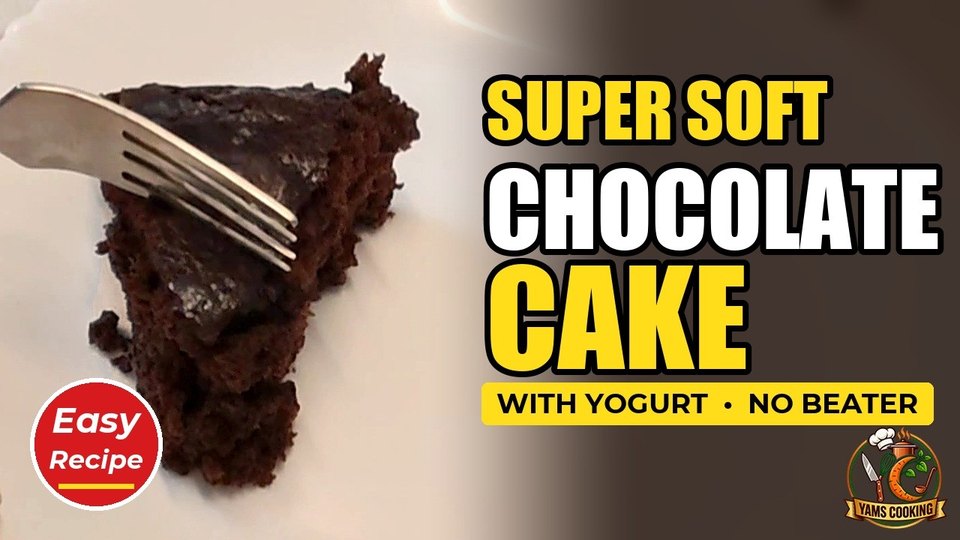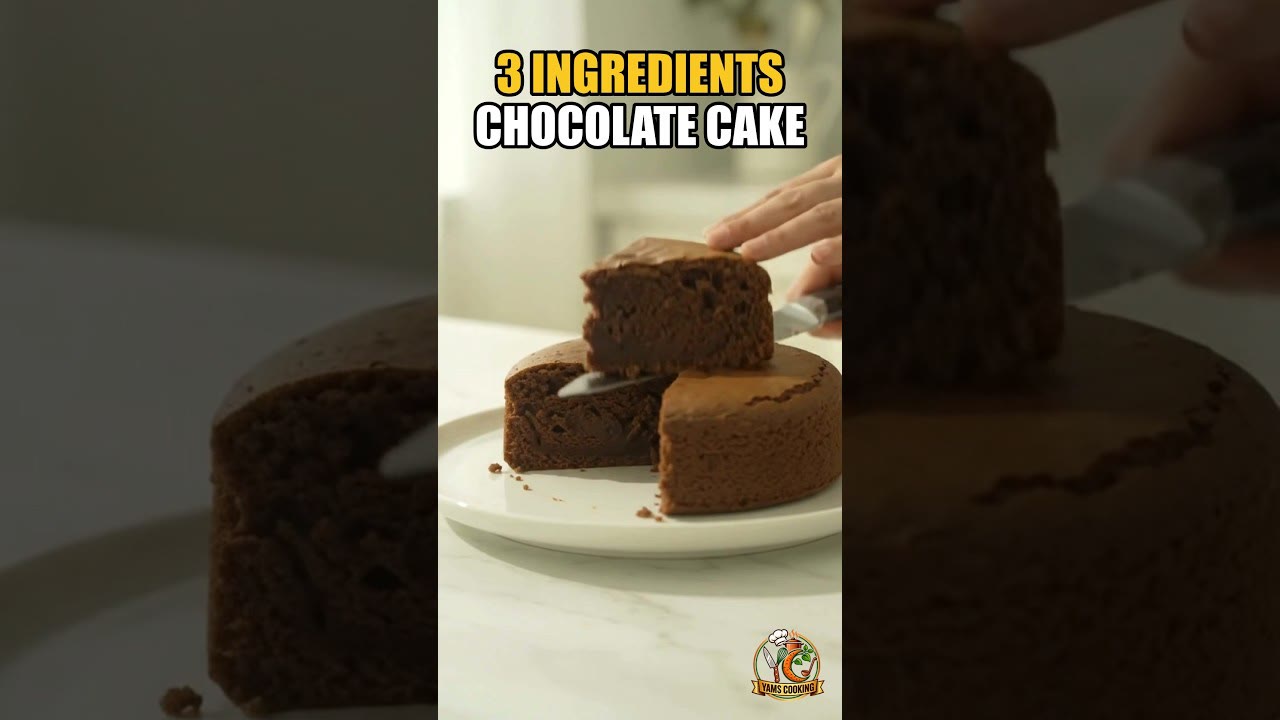
3-Ingredient Chocolate Cake
No oven · no eggs · cooked in a pot
The spread brings the sugar, fat and cocoa, the self-rising flour brings its own leavening and the milk loosens it to a pourable batter. A covered pot with a trivet in the bottom does what an oven does — surrounds the tin with steady, even heat. Keep the flame low and it comes out tender every time.
Ingredients
- 1 cup (300 g) chocolate hazelnut spread
- 1 cup (125 g) self-rising flour
- 3/4 cup (180 ml) milk
Nutrition is an estimate per serving.
Method
- Grease a 7-inch (18 cm) round tin and line the base with baking paper.
- Warm the spread for 20 seconds so it stirs easily, then whisk in the milk until smooth and glossy.
- Fold in the self-rising flour and stop as soon as the streaks disappear.
- Pour into the tin and tap it on the worktop to level the top.
- Sit a metal trivet in a large deep pot, cover and heat on medium for 5 minutes.
- Lower the tin onto the trivet, cover and cook on the lowest heat for 35-40 minutes.
- A skewer in the centre should come out clean. Rest 10 minutes before turning out.
Watch it made
Notes on this recipe
Why three ingredients is enough
Most cake recipes are long because the fat, sugar, cocoa, egg and raising agent all arrive separately. Here two ingredients each do several jobs at once. The chocolate hazelnut spread brings sugar, fat and cocoa in one; self-rising flour brings the flour and the raising agent already blended in the right proportion. Milk is the only thing left to add, and its job is simply to loosen the mixture to a pourable batter. Nothing is hidden in the list — it genuinely is three things.
What the pot is actually doing
An oven cooks by surrounding food with hot, dry air. A covered pot with a trivet in the bottom does the same thing with a little steam in it, and that steam is an advantage rather than a compromise: it keeps the surface from drying before the centre is cooked, which is why this cake stays moist without any of the usual tricks. The trivet matters. It lifts the tin clear of the base so the heat reaches it through air rather than through direct metal-to-metal contact, which would scorch the bottom long before the middle set.
The lowest flame you have
This is the one instruction that decides whether it works. Too much heat sets the edges while the centre is still batter, and you get a scorched rim around a wet middle — the pot version of the commonest cake failure there is. Preheating the covered pot for five minutes before the tin goes in gets the air inside up to temperature, so the cake starts cooking evenly rather than from the base upwards. A heavy pot holds that heat steadier than a thin one.
Knowing when it is done
A skewer in the centre should come out clean — clean, not with crumbs, which is the brownie test and the wrong one here. Resist lifting the lid before thirty minutes: the escaping steam drops the temperature inside sharply, and a cake that has not set yet can sink when that happens. If yours does sink, the shape of the dip tells you which cause it was. Rest it ten minutes before turning out, or the structure is still too soft to hold together.
Swaps and storage
No self-rising flour? Use one cup of plain flour with one and a half teaspoons of baking powder and a quarter teaspoon of salt. Any chocolate hazelnut spread works; cheaper brands are usually sweeter, so the cake comes out sweeter too. Keeps three days in an airtight tin at room temperature, and improves on the second day as the crumb settles. 273 calories a slice at eight slices.